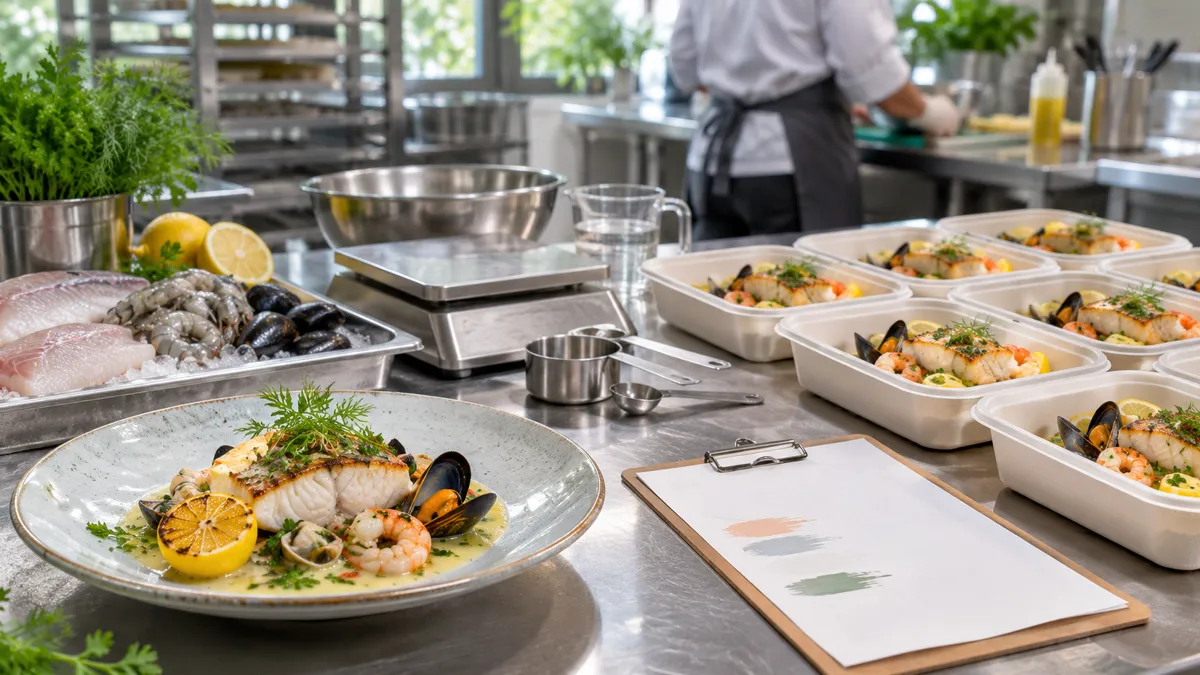
Getting a seafood dish from a development kitchen into everyday service can expose problems that a tasting session misses. Restaurants and caterers exploring custom seafood solutions need a brief that describes the working kitchen as carefully as the desired flavour. The manufacturer needs to understand how the product will be stored, prepared and served, so that the finished specification supports the people using it.
Table of Contents
Describe the Point Where the Product Enters Service
Explain what will arrive and what the kitchen will do next. A raw portion, a coated frozen item and a fully cooked component require different handling and preparation. State the available equipment, likely batch sizes and the level of preparation staff can manage. A sample prepared by a development chef with specialist equipment may be difficult to reproduce elsewhere.
Service conditions belong in the brief too. A product cooked to order may need different characteristics from one intended for an approved hot-holding process or delivery menu. Describe the relevant conditions and have the preparation and holding instructions assessed by the responsible food safety team. Product development should account for the actual route to the plate.
Separate Essential Characteristics from Flexible Preferences
Identify what makes the dish recognisable to the customer. This might be a particular species, a visible piece size or a coating that behaves well under the intended cooking method. Explain why each essential feature matters. A supplier can make more useful suggestions when the brief distinguishes a genuine menu requirement from an assumption that could be changed.
Set measurable expectations where possible. Portion-weight ranges, the proportion of coating and the amount of sauce can be discussed more precisely than words such as generous or premium. Photographs may help describe presentation, but they should sit alongside a written specification and a practical method for judging samples.
Consider flexibility deliberately. A prepared component may reduce work during service, while a less finished product may give chefs more freedom to adapt dishes. The relevant trade-off is the total work and consistency required across the kitchen, rather than how many steps the manufacturer can remove in isolation.
Test Samples Under Ordinary Kitchen Conditions
Arrange trials with the people who will prepare the product and use the equipment available at the intended sites. Record preparation time, saleable portions and the eating quality at the point of service. Where sites differ, include more than one in the trial so that approval is not based on a kitchen with unusually favourable conditions.
Cost the dish using the trial results. Include preparation labour, cooking loss and unused portions alongside the purchase price. Pack size can make a noticeable difference: a large bag may suit a busy site but create awkward leftovers at a quieter one. The brief should allow these differences to emerge before the business commits to a standard format.
Production Approval Needs a Clear Handover
Agree which commercial trial represents the approved product, then keep its specification under version control. Confirm minimum orders, lead times and the notice required for forecast changes. If printed packaging or a specialist ingredient involves a separate commitment, establish how any unused stock would be handled when the menu changes.
The handover should include the final ingredients, storage conditions and preparation instructions, with a named contact for technical questions. Later substitutions need an agreed approval process so that a purchasing change does not quietly alter the dish. This is particularly important for updating allergen information when recipes or ingredients change, including the information available to kitchen and serving staff.
A successful brief lets the manufacturer understand the dish and lets the kitchen judge whether it will work. Keep the essential characteristics clear, test the commercial product in realistic service and agree how future changes will be controlled. That gives the menu a repeatable foundation while leaving sensible room for the needs of individual sites.